






In the world of high-power optical transmission, a single speck of dust is more than a nuisance—it is a potential catastrophic failure point. For a high-power EDFA/ EYDFA amplifier, operating with dirty connectors is like driving a high-performance engine with a blocked fuel line. Under the intense energy of a 1550nm pump laser, contaminants can cause “fiber burn,” leading to permanent port degradation and expensive hardware repairs.
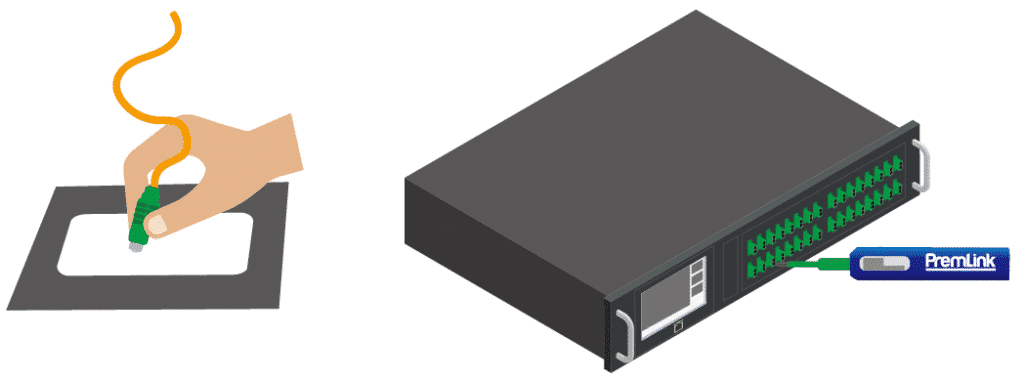
The “Invisible Threat”: Why Cleaning Your EDFA/EYDFA is Mandatory
Why is the EDFA/ EYDFA amplifier so sensitive? When the unit is active, the optical power density at the LC/APC or SC/APC connector tip is immense. Dust particles absorb this energy, heat up instantly, and can literally pit or melt the ceramic ferrule. This results in:
- Increased Insertion Loss: Dropping your optical budget and starving subscribers of signal.
- Back Reflections (ORL): Destabilizing the pump laser and increasing the Noise Figure (NF).
- Physical Hardware Damage: Burning the internal optical adapter, requiring a factory RMA.
⚠️ CRITICAL SAFETY WARNING: Never attempt to clean a connector while the EYDFA amplifier is powered on. Invisible Class 4 laser radiation can cause permanent retinal damage in a fraction of a second. Always turn off the laser key switch before inspection.
Step-by-Step: Professional Cleaning Protocol
1. Inspecting the Fiber Connector
Remove the dust cap and use a high-resolution fiberscope to inspect the end-face. Look for “halos” (oil), “peppers” (dust), or “scratches” (permanent damage). If the surface isn’t pristine, proceed to dry cleaning.
2. The Dry-Cleaning Method
Use a high-quality “One-Click” fiber cleaner or a lint-free dry cloth. Wipe the connector tip in a consistent motion. Avoid using standard isopropyl alcohol unless it is 99% tech-grade and followed by a dry wipe, as low-grade alcohol can leave a film that burns under the EYDFA amplifier’s high power.
3. Cleaning the Internal Optical Adapter
The adapter inside the EYDFA amplifier chassis is often overlooked. Use ultra-filtered compressed air (residue-free, < 0.2 microns) held about 6 inches away. Spray short bursts to dislodge debris. If stubborn dirt remains, use a 2.5mm specialized cleaning swab designed for optical bulkheads.
Professional Integration Sequence
Once your connectors are clean, the power-up sequence is vital for the longevity of your EDFA/ YDFA amplifier:
- Pre-Check: Verify the transmitter output is within the -10 to +10dBm window (0dBm is the “Sweet Spot” for most Premlink units).
- Disable Laser: Turn the transmitter key to the OFF position.
- Secure Connection: Fully seat the clean patch cord into the amplifier input.
- Power Sequence: Power up the transmitter first, then turn the EDFA/ YDFA amplifier laser key to the ON position.
FAQ: Field Maintenance Insights
Q1: Can I use compressed air from a standard hardware store?
A: No. Standard canned air often contains bitterants or propellants that leave an oily residue. For an EYDFA amplifier, only use ultra-filtered, non-residue inert gas specifically labeled for optical systems.
Q2: How often should I clean the connectors?
A: Follow the “Clean Every Time” rule. Even a brand-new patch cord out of the bag can have factory residue. Inspecting every time you plug or unplug is the only way to guarantee link redundancy.
Q3: What if I see a black pit on the connector through the scope?
A: That is a “burn-in.” It cannot be cleaned. You must replace the patch cord or re-polish the ferrule. Using a burnt connector will eventually damage the internal adapter of your EDFA/ YDFA amplifier.
Q4: Why does my output power fluctuate after cleaning?
A: Ensure the connector is fully clicked into the adapter. If the fluctuation persists, check our guide on APC Mode Optimization to see if the system is compensating for a bad physical connection.
High-performance HFC networks demand precision. Keeping your EDFA/ EYDFA amplifier clean is the simplest way to prevent downtime. For more technical support on network configuration or laser safety protocols, explore our full technical library.