




What is RF Overlay on PON?
Enabling Cost-Effective Triple-Play Services
RF Overlay on PON, As telcos turn to triple-play services (video, voice and high-speed internet access) to reduce churn and increase revenue, they need to find a way of delivering TV and video to the end-user as cost-effectively as possible.
Core Technology: Dedicated Wavelength for Video
Each of the major point-to multi point PON variants – BPON, GPON and EPON – offers TV/video service: RF (radio frequency) overlay.In a point-to-multipoint PON architecture, one wavelength frequency is assigned for downstream data and telephony (1490 nm) and another is assigned for upstream data (1310 nm). With the RF overlay approach, through the use of wave-division multiplexing (WDM), a third downstream frequency is assigned – 1550 nm – which is dedicated to video broadcast. RF overlay is capable of delivering all types of video service: analogue broadcast, digital broadcast and HDTV, and video-on-demand.
Key Advantage: No Impact on Data Throughput
As TV broadcasting is assigned to a dedicated frequency it will not eat into the data throughput of the PON. It offers a comparatively short entry-to-market time to deliver TV services (no set-top boxes are needed for the delivery of analogue broadcast over coaxial cable in the home).
Smooth Migration Path to Future IPTV
Through the use RF overlay, operators can gradually migrate to IPTV (by using both delivery systems simultaneously) without the need for external set-top conversion apparatus (assuming they have shipped hybrid IPTV/RF set-top boxes to their customers). This could be an important consideration for operators since IPTV, unlike RF overlay, is not yet a proven technology for delivering video services on a large scale…
Applications and Market Drivers
RF Overlay is a strategic solution for Municipal Broadband Networks and Multi-Dwelling Units (MDUs), like apartment complexes and hotels, that want to offer basic or premium TV services without having to make big changes to their infrastructure. It is also the best choice for operators in areas where IPTV licensing is hard to get or where there are a lot of old analog TVs. The technology effectively bridges of connecting old broadcast networks with fiber networks that will last for a long time.
How does RF Overlay Works on PON?
Step 1: Signal Generation at the Headend
The RF TV signal is distributed by the 1550nm optical laser transmitter which makes E/O convertering at headend.
Step 2: Amplification and Transmission
The RF signal is transported by a separate fiber network to EDFA, or EDFA PON Combiner.
Step 3: Wavelength Multiplexing & Integration
This PON WDM combines the RF signal with the data traffic from the OLT, which uses a different wavelength (1310/1490 nm), putting three wavelengths (1550/1310/1490nm) on the same fiber PON and distributing them downstream through the splitters to the customer’s ONT/ONU.

Key System Equipment and Their Roles
- 1550nm Optical Transmitter: This device is at the headend and is meant to send high-quality analog video over long distances while making sure the signal is of broadcast quality.
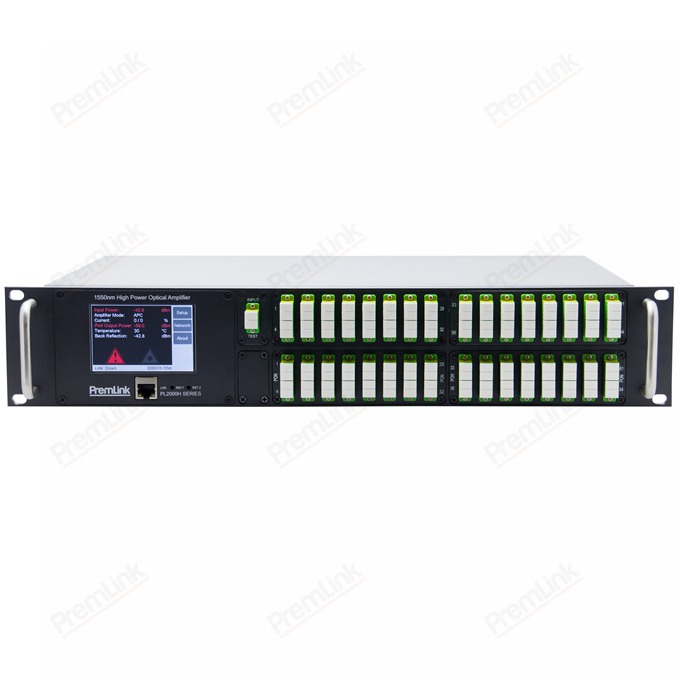
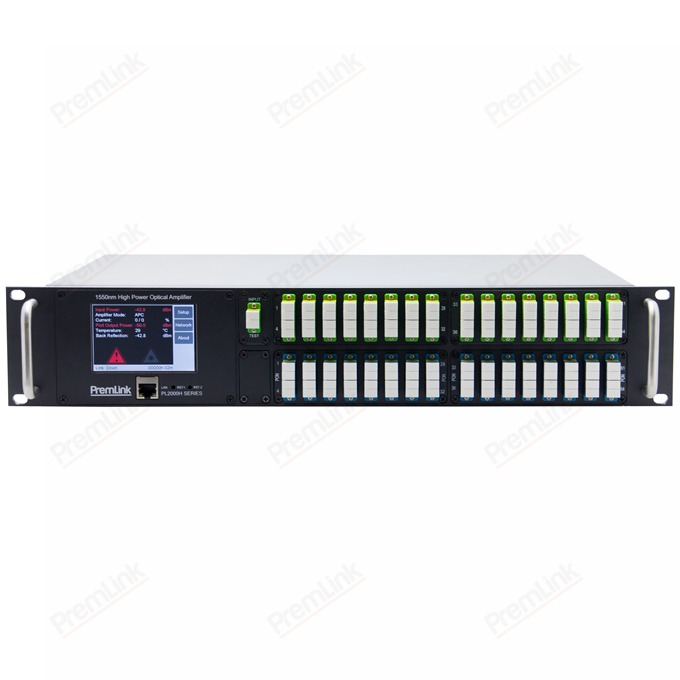
- EDFA PON WDM Combiner (Integrated Unit): This device strengthens the 1550nm video signal without changing it electrically, and it keeps the signal strong over long fiber lengths, which is important for large service areas. The inside PON WDM Combiner is the part of the system that accurately combines three (or five with XGS-PON) wavelengths onto one fiber. This stops the video and data channels from talking to each other.
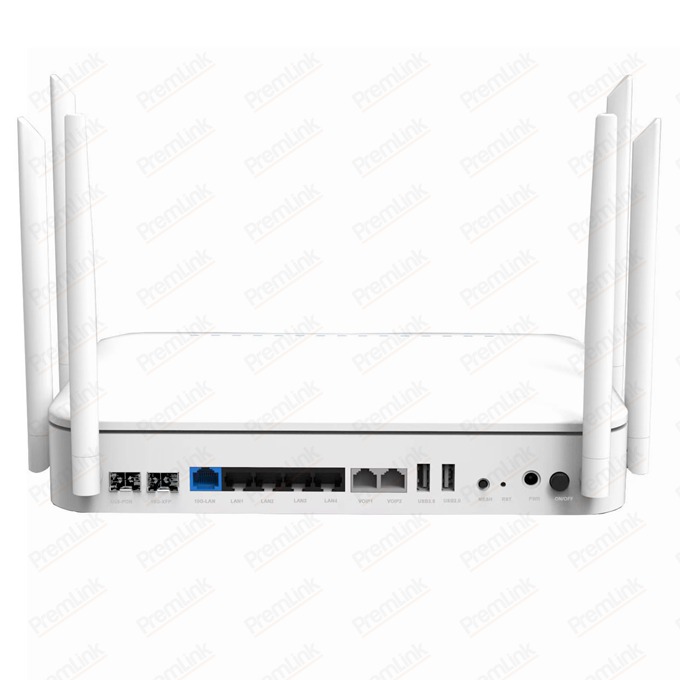
- Hybrid ONT/ONU or PON WDM Optical Receiver: This terminal device splits the wavelengths at the customer’s site. It sends the RF video signal to a coaxial port on the TV.
RF Overlay on PON Extends to XGS-PON & GPON Co-existence
Upgraded WDM Combiner for Compatibility with Multi-Generation PON
The PON WDM combiner has been upgraded so that it can work with both XGSPON-PON (1270nm, 1577nm) and GPON (1310nm, 1490nm) on the same fiber.
RF Overlay on PON Network Topology Diagram

The figure shows how the 1550nm video signal can work with XGS-PON (1270nm/1577nm) and GPON (1310nm/1490nm) data wavelengths through an upgraded WDM combiner on a single fiber infrastructure.
The Benefit of RF Overlay on PON
1. Expanded Service Capabilities & Market Reach
RF Video Overlay allows you to add a large range of TV services, making it possible to service all potential subscribers on the network.
2. Using infrastructure in a cost-effective way
It’s possible to use existing coaxial networks in the home to supply TVs by sending an RF signal that can be connected directly to all TVs after the optical/electrical conversion at the CPE. This avoids the need for set-top boxes and rewiring of the home.
3. Coexistence of Multiple Generations of PON and Future-Proofing
The new PON WDM combiner works with both XGS-PON (1270nm, 1577nm) and GPON (1310nm, 1490nm) and can also send video over the same fiber at 1550nm. This gives:
- Unified Fiber Infrastructure: One fiber carries all types of services
- Smooth Network Evolution: lets you switch from GPON to XGS-PON without affecting current RF video services
- Investment Protection: Makes the most of current infrastructure while getting ready for new technologies
4. Service quality and performance are guaranteed.
- Dedicated Video Wavelength: 1550nm frequency makes sure that TV broadcasts don’t slow down data transfer.
- Integrity of the signal: Wavelength isolation stops services from interfering with each other.
- Reliable Delivery: RF technology that has been tested for large-scale video distribution